
Consumer Guide
What To Do After a Car Accident Before Insurance Gets Ahead of You
Most people think insurance companies will simply handle everything after a crash. But the steps you take in the first hours and days can affect your claim, your medical care, and whether you get stuck paying for someone else’s mistake.
Free consultation · No upfront fee · Hablamos Español
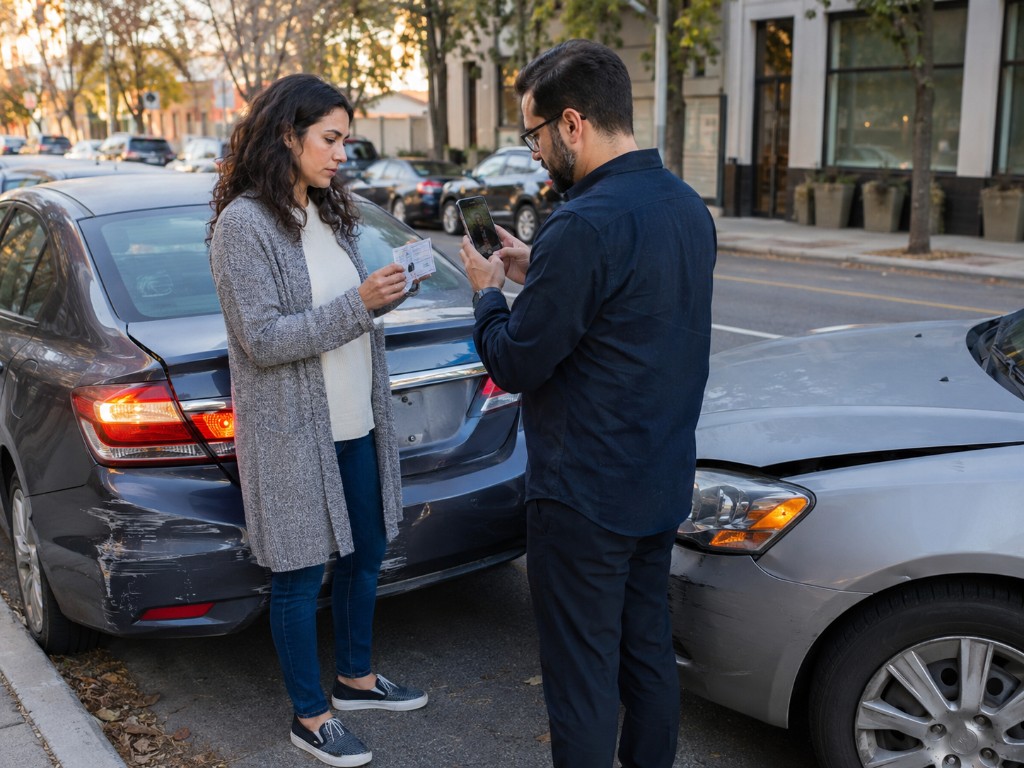
A lot of people walk away from a car accident thinking the same thing:
“I’m okay. The damage doesn’t look that bad. Insurance will deal with it.”
Sometimes that’s true. A small bump in a parking lot really does end with a couple of phone calls and a check for a new bumper. But sometimes the pain shows up two days later, the other driver changes their story, or the first call from an insurance adjuster turns into a recorded statement that gets used against you.
This guide is meant to slow things down. It walks through what to do at the scene, what to be careful about in the days that follow, and when it’s worth talking to a lawyer — even if you’re not sure you have a “case.”
Most of it is common sense. However, in the immediate aftermath of a crash, adrenaline is high and your brain is in survival mode. So treat this as a checklist you can come back to.
Document Everything Before the Scene Changes
The scene of the accident starts disappearing the moment it happens. Cars get pulled out of the road, witnesses go home, and skid marks fade. By the time you’re telling the story a week later, half the details that could prove what really happened are gone.
This is why the few minutes you spend documenting things — even when you’re shaken and just want to leave — tend to matter more than anything else.
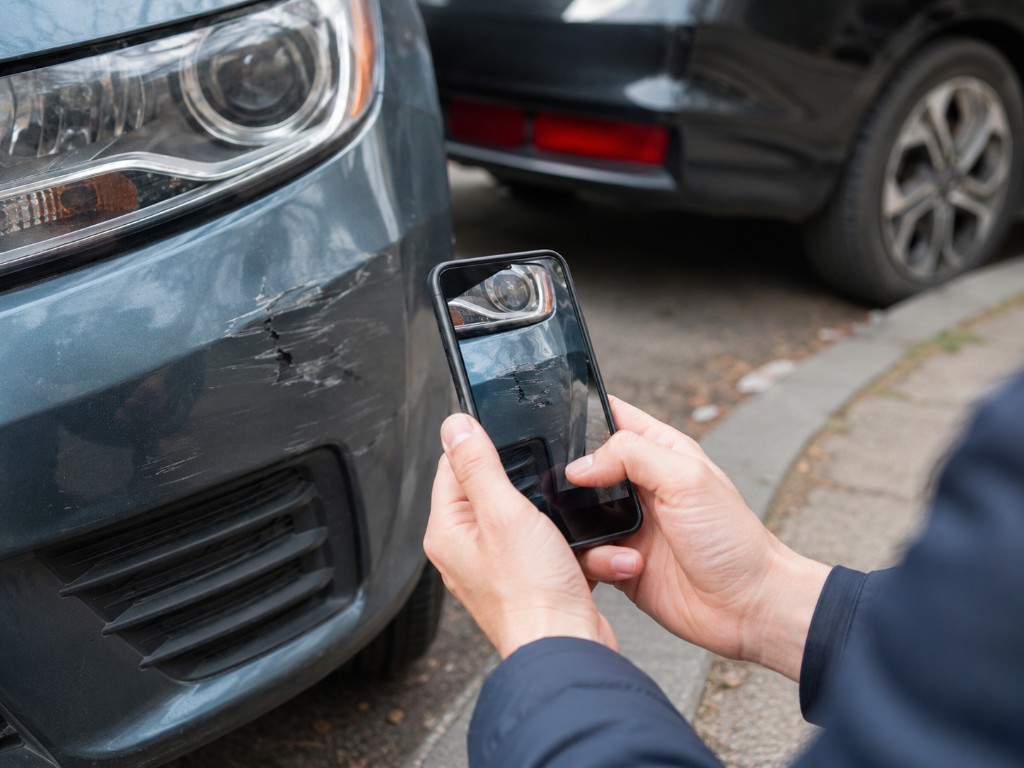
What You Should Photograph
- Close-ups of the damage
- Wide shots of the scene
- The position of each car
- The road
- Signs and signals
- The surrounding area
Take close-ups of the damage from a few angles. Then back up and take wider shots that show where the cars are relative to each other, the lane lines, the curb, and any traffic signs or signals nearby. A close-up of a dented bumper doesn’t prove much on its own. The same dent in context — at an intersection, with skid marks behind one car — tells a much clearer story.
It’s also worth capturing things that feel irrelevant at first:
- The weather
- Glare from the sun
- Construction cones
- A blocked sight line
- Whether the other car had a passenger
- Whether the other driver was on their phone when they got out
You probably won’t need any of it. But if you do, you’ll be glad you have it.
Get the Basics from the Other Driver
Exchange information calmly. You want:
- Name, phone number, and address of the other driver
- A photo of their driver’s license
- A photo of their insurance card (front of the card is fine)
- The license plate, make, model, and color of their vehicle
- Whether they were driving someone else’s car, a work vehicle, or a rideshare
Taking photos is faster and more accurate than writing things down — and the photos timestamp themselves on most phones.
Witnesses, Dashcams, and Apps
If anyone stopped or saw what happened, ask for a name and phone number. You don’t need a statement. You just need to be able to reach them in two weeks if the story starts to shift.
If you have a dashcam, save the footage before you do anything else. Many dashcams overwrite themselves on a loop, so the video of the crash you assumed was saved may actually be about to disappear.
If you were driving for Uber, Lyft, DoorDash, Instacart, Amazon Flex, or any app at the time, screenshot the trip or delivery in progress before it disappears from your history. The same goes if the other driver was clearly working — an Uber sticker in the window, a delivery bag on the seat, a logo on the door. Be sure to photograph it.
Don’t Rush to Tell Everyone You’re Fine
Right after a crash, adrenaline does strange things. It can mask real pain for hours, sometimes longer. People walk away from accidents convinced they’re completely fine, but wake up the next morning unable to turn their neck or get out of bed without help.
Neck, back, shoulder, head, and soft-tissue injuries are notorious for showing up later. Whiplash can take 24 to 72 hours to fully present. Concussion symptoms can be subtle and easy to write off as “a rough night’s sleep.” A “sore shoulder” can turn out to be a torn rotator cuff. None of this means you’re “making it up” — it means the body doesn’t finish reacting to a crash in the first thirty seconds.
So when someone — a bystander, a police officer, the other driver, an adjuster — asks how you feel, you don’t have to perform. A casual “I’m totally fine, no big deal” can absolutely get repeated back to you weeks later, by someone arguing you weren’t really hurt.
You do not need to exaggerate anything. But you also do not need to diagnose yourself on the side of the road five minutes after impact.
It’s okay to say you’re shaken up and want to see how you feel. If pain, stiffness, dizziness, numbness, ringing in your ears, headaches, nausea, or anything else unusual shows up in the hours or days after the crash — get checked out. Document what you’re feeling, even in a notes app. The timeline of when symptoms appeared can matter.
Be Careful Before Giving a Recorded Statement
Insurance adjusters are usually friendly. They sound calm, sympathetic, and like they’re “just trying to get the file moving so we can take care of you.” Sometimes that’s exactly what they’re doing. But it’s worth remembering that they work for a company whose main goal is to pay out as little as possible.
That doesn’t make them villains. It does mean their interests and yours aren’t identical, especially in those first few days when you don’t fully know what you’re dealing with yet.
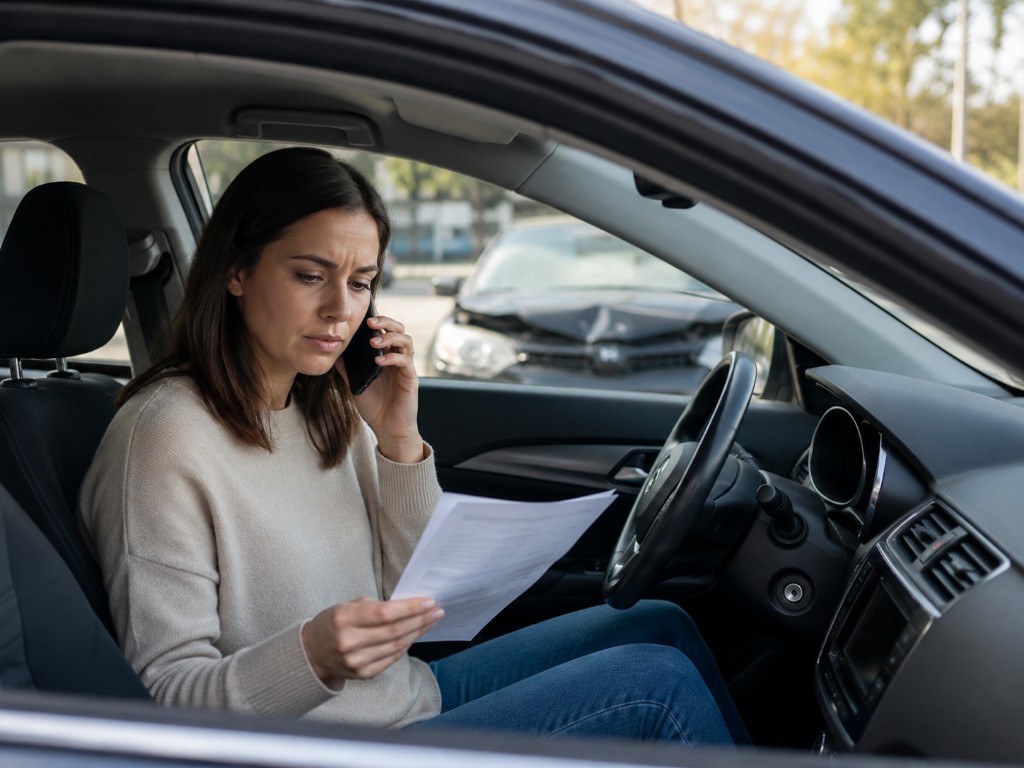
Recorded Statements Are Not Casual
A recorded statement is, legally, a piece of evidence. It can be replayed, quoted, and used to argue that what you said two days after the crash should bind what you’re allowed to claim months later. That’s a heavy thing to give before you even know what your injuries are.
In most situations, you don’t have to give the other driver’s insurance a recorded statement at all. Your own policy may obligate you to cooperate with your own insurer, but even then, it’s reasonable to ask for the basics in writing first.
Don’t Guess
If you don’t know how fast you were going, how many feet you were from the intersection, or exactly where you were looking the second before the crash — say you don’t know. Guesses become “the driver stated…” in a report. A guess that turns out to be off by 10 mph can be used to argue you were speeding.
The same applies to injuries. If you’re not sure yet, say you’re not sure yet. Don’t lock yourself into “my neck feels okay” before you’ve been examined.
Cooperating Is Different from Rushing
You can be polite, return calls, and provide basic facts without agreeing to a recorded interview the same afternoon as the crash. If an adjuster pushes hard for one before you’ve had time to think, that itself is a signal to slow down.
Don’t Take Fast Settlement Offers
A quick offer can feel like a relief. The accident is over, the check is here, you can move on with your life. The problem is that quick offers almost always show up before anyone — including you — knows how the injury is actually going to affect your life.
It usually takes a few weeks of doctor visits and treatments before you have a real picture of what an injury is going to cost. An offer that arrives on day five is, by definition, an offer made without that picture.
A Few Things Worth Knowing Before You Accept
- The first check may not account for future treatment, physical therapy, or surgery
- Most settlements require you to sign a release of all future claims tied to the accident
- Property damage (your car) and bodily injury (you) are usually handled separately — accepting one doesn’t mean you’ve resolved the other
- “Final” offers are often not actually final
- Lowball offers are common when people are stressed, in pain, and want closure
Once you sign a release, going back later — even if your injury gets dramatically worse — is very hard. Sometimes impossible.
A quick offer is not always a fair offer. It’s often just the easiest one for the insurance company.
Get Checked Out and Keep Every Record
This is not about “building a case” in a fake way. It’s about creating a clear, honest record of what actually happened and how the accident affected you. If you’re hurt, that record is what eventually proves it.
Get medical care if you’re in pain or feel off — even days later. Then follow through with what your doctor recommends. Gaps in treatment are one of the easiest things for an insurance company to point at later to argue you must have been fine.
What to Keep in One Place
- Bills, discharge papers, imaging results, prescriptions, and referrals
- Notes on missed work and lost income, including partial days
- A simple pain or symptom journal
- Receipts for towing, rental cars, transportation to appointments, and out-of-pocket costs
- Repair estimates and the final invoice for your car
- Every email, text, and letter from any insurance company
None of this has to be fancy. A folder on your desk, a notes app on your phone, photos of paperwork — whatever you’ll actually keep up with. The point is that, two months from now, you should be able to find anything you need with ease.
When Should You Talk to a Lawyer?
Not every accident needs a lawyer. If the damage is minor, nobody was hurt, and the claim is moving smoothly, you may not need one at all. Most people don’t.
But there are situations where it really is worth a short conversation, even if you’re not sure you want to do anything about it yet. Talking to a lawyer doesn’t mean you’re filing a lawsuit. It just means you’re getting a clearer picture of where you stand before you make decisions that are hard to reverse.
It’s Usually Worth a Call If…
- You were injured, even if you’re “mostly fine”
- Pain or symptoms appeared in the days after the crash
- The other driver denies fault or changes their story
- There were multiple vehicles involved
- A commercial vehicle, delivery van, or company truck was involved
- A pedestrian, cyclist, or motorcycle rider was hit
- Insurance is pressuring you to sign or settle quickly
- The offer on the table feels low compared to your bills
- You missed work or are still missing work
- You need ongoing medical treatment
- It was a hit-and-run
- You’re unsure who is responsible for the costs
A consultation is a zero-cost way to understand your options. If your situation is genuinely simple, a good lawyer should tell you that. If it’s more complicated than you thought, you’ll be glad you asked sooner rather than later.
Quick Checklist: What To Do After a Car Accident
Save this, screenshot it, or send it to someone who might need it.
- Move to safety if you can
- Call 911 if anyone may be injured
- Exchange information with the other driver
- Take photos and videos of the scene
- Get witness contact information
- Don’t casually admit fault
- Don’t rush to say you’re fine
- Get medical attention if needed
- Notify your own insurance company
- Be careful with recorded statements
- Don’t accept a quick settlement without understanding it
- Talk to a lawyer if injuries, fault, or insurance issues are unclear
Have questions after a crash? Insider Lawyers offers a free case review — no pressure, no obligation.
Not Sure What to Do Next? Start With a Quick Accident Review
Answer a few basic questions so the firm can understand what happened and whether it may be worth a free case review.
Prefer to call? 844-467-4335
Common Questions
Short, honest answers to the questions people ask most after a car accident.
Should I talk to the other driver’s insurance company?
You usually don’t have to give the other driver’s insurance a recorded statement. You can be polite, confirm your contact info, and stop there. Anything beyond that, especially before you know how your injuries are going to play out, is worth thinking about carefully.
What if I felt fine right after the accident but hurt later?
That’s common. Adrenaline can mask pain for hours or even days. If symptoms appeared after the crash, get checked out and keep track of when each symptom started. A delayed onset doesn’t mean the injury isn’t real.
Should I accept the first settlement offer?
Be careful. Quick offers usually arrive before anyone knows the full extent of an injury, and most include a release of future claims. If the offer feels rushed or low compared to your bills, it’s reasonable to slow down before signing.
What photos should I take after a car accident?
Close-ups of the damage on every vehicle, wider shots showing where the cars ended up, license plates, the other driver’s insurance card and license, road conditions, traffic signs and signals, weather, skid marks, and anything that helps show what happened. More is better — you can always delete later.
Do I need a lawyer for a minor accident?
Not always. If nobody was hurt and the claim is moving smoothly, you may not. But if you were injured, fault is disputed, insurance is pressuring you, or the offer feels low, a free consultation is an excellent way to find out where you stand.
Does calling a lawyer mean I have to file a lawsuit?
No. A consultation is just a conversation. Whether to pursue a claim is your decision, and a good lawyer will help you understand your options without pressuring you into anything.
What if the other driver says the accident was my fault?
Don’t panic, and don’t argue at the scene. Their story to insurance might change again later. The best thing you can do is document the scene thoroughly, get witness contact info, and avoid making admissions of your own. If fault becomes disputed, that’s exactly the kind of situation where it’s worth a call.
Don’t Let the Insurance Company Get Too Far Ahead of You
If you were hurt, are unsure what to say, or already dealing with insurance pressure, slow down before signing anything. A short call can help you understand your next step.